
9 Films Based On True Stories That Were Slightly Changed For Creative Purposes
- 4:58 pm September 17, 2022
You may have noticed that films which are based on true events are more thrilling and compelling since we can connect with the characters and admire historical occurrences. We have a constant desire to learn more. We must keep in mind, though, that fiction sometimes performs better than reality. In order to increase the drama or to improve the storyline, what occurs in the movie frequently differs greatly from what actually occurs in real life.
Did you know that in the movie Theory Of Everything, Stephen Hawking’s love story was changed.

Astrophysicist Stephen Hawking and his wife Jane are the subjects of this film, which details their love their as well as the difficult challenges they faced as a result of Stephen's progressive illness for more than 30 years. Contrary to what is shown in the movie, Stephen and Jane did not meet at Cambridge University in the UK.
The two met in St. Albans High School, according to Jane, and their relationship started there. She added that the film failed to depict her frequent, protracted trips abroad and how difficult it was for her to manage everything.
Did you know that in the movie The Drivers rivalry in Rush was exaggerated a little bit

The movie follows the lives of two Formula One racers who competed for championships in the 1970s: Niki Lauda and James Hunt. The film dramatizes the rivalry and hostility between the drivers, but in reality, they developed a strong bond and even lived together.
Gladiator had various inaccuracies and changed historical facts

The masterpiece from 2000 that captivated thousands of viewers had a number of problems. One idea involves handing out printed paper leaflets to the crowd in the Colosseum, which was unheard of at the time. Another error is that the Colosseum's current name was only adopted after the Middle Ages; under the Roman Empire, it was known as the Flavian Amphitheater.
The worst mistake was the passing of Emperor Marcus Aurelius and his tumultuous relationship with his son Commodus, who was portrayed by Joaquin Phoenix. In actuality, the Roman emperor passed away naturally and was at his side the entire time. Contrary to what the movie suggests, Commodus was close to his father and co-ruled the empire with him.
You probably didn’t know that in the movie The Imitation Games they changed the name of the machine.

This movie tells the incredible tale of Alan Turing, a British scientist who developed the machine that cracked German codes and helped end the war. The name "Christopher" given to the computer in the movie was purportedly inspired by Turing's childhood romance on his friend Christopher Morcom, however this couldn't be further from the truth. In actual life, the device was referred to as "The Bomb."
Despite the lack of evidence to the contrary, Christopher and Turing did have a close relationship, and the scientist was deeply affected by his passing. Turing collaborated with mathematician Gordon to build the computer, which is another fact that is left out of the movie.
Did you know? William Wallace was not the real Braveheart.

Even though Mel Gibson's iconic character William Wallace was based on a real person, his historical importance was exaggerated, and the death of his wife was made up to add drama. King Robert I of Scotland, who is portrayed by actor Angus Macfadyen in the movie, was given the nickname "Braveheart," not Wallace.
Django Unchained was a game changer

Jamie Foxx undoubtedly left his mark on cinema by playing Django, and one of the things we will never forget about him is his unique aesthetic. Sunglasses are worn by the character throughout almost the whole movie, which is impossible given that they were trendy in the 1920s, at least 60 years after the period the movie is set.
Also read: 10 Movies You'll Wish Were Not Based On True StoriesDid you know? The exact amount of Chris’ income was changed by The Pursuit of Happiness.
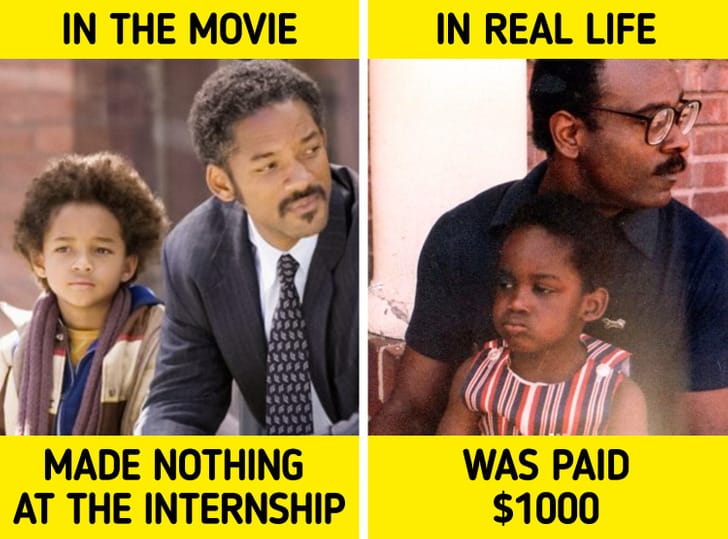
The film tells the story of Chris Gardner’s struggle and subsequent overcoming of his circumstances, the protagonist agrees to do an internship at a brokerage firm without a salary. This was completely exaggerated to increase the drama of the film.
Chris actually got paid a thousand dollars, which, although not a huge amount for a father taking care of his son in San Francisco, is a far cry from what the movie led us to believe.
Shakespeare was not motivated to compose Romeo and Juliet by love.
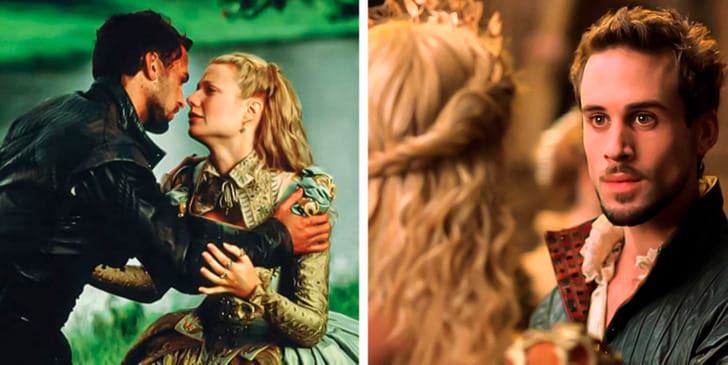
Shakespeare in Love's romance was most likely made up That's the reason why so little is known about William Shakespeare's private life. It is wrong to say that it inspired him to compose Romeo and Juliet, one of his greatest works. Shakespeare really adapted it from a well-known play written by the Italian dramatist Luigi Da Porto.
At the same time, the queen would be unable to go to watch a play. The theatrical groups were the ones that journeyed to the court to perform.
Apollo 13 and the forgotten hero no one talks about
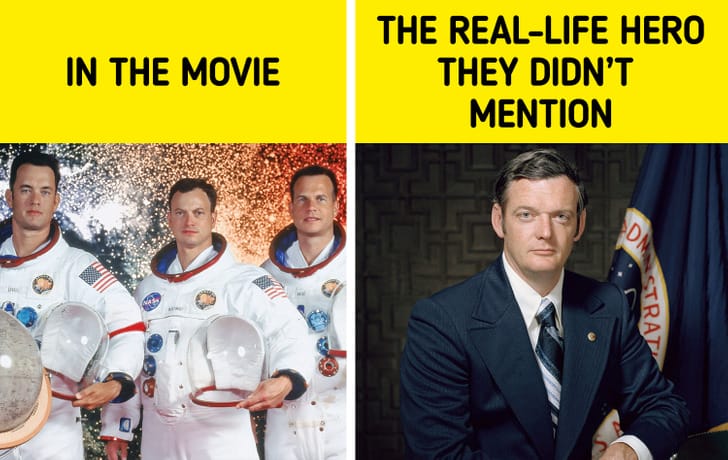
There were never any problems or arguments between the astronauts and the other NASA staff, in contrary to what the film portrays. The solutions to the problems in the movie were also partially improvised in order to maintain the drama, but in real life, there are crisis and contingency plans for every unforeseen catastrophe.
The engineer and flight director Glynn Lunney, a key figure in the crew of Apollo 13, was also omitted from the film. He made quick, wise choices that helped ensure the astronauts' safe return to Earth.


10 Movies You'll Wish Were Not Based On True Stories
- 12:24 pm March 26, 2018

9 Horror Movies That Are Actually Based On Real Stories!
- 11:40 am January 29, 2022

9 Strange Twin Stories You Won't Believe But Are Actually True!
- 10:35 am November 24, 2020
10 Confusing Facts About Legendary Movies And T.V Shows
- 5:40 pm September 4, 2018

7 Great Movies That Are Actually Based On Real Life Love Stories
- 12:06 am February 6, 2021
‘They Mailed Him Pictures Of His Wife’ 13 People Share Their Scariest True Stories.
- 1:00 pm March 17, 2018