
7 Animals You Had No Idea Were Related To Each Other
- 7:19 pm May 23, 2022
- suhas
Current estimates for the number of species on Earth range between 5.3 million and 1 trillion. Anything from little insects in the Amazonian rainforest to the enormous blue whales wandering the seas. It seems like the habitats of our planet are assorted and apparently detached in any way, however when we investigate, strange relations arise.
Humans and Kangaroos
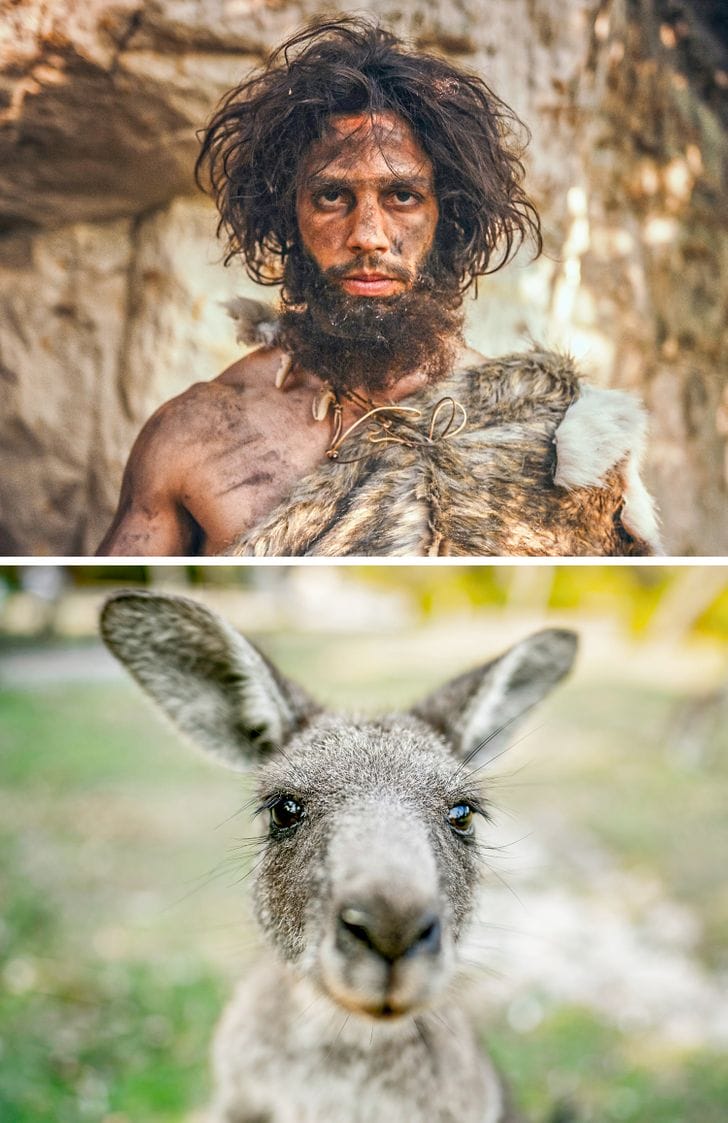
You versus a kangaroo in a running challenge — who wins? Not to be unfortunate messengers however kangaroos can run at paces of up to 44 mph and Usain Bolt's record for speed is 27.78 mph (and not to accept anything, yet you most rebelliously are no Usain Bolt). So kangaroos are simply fabricated uniquely in contrast to us humans? Not in the event that we discuss our genomes. Human and kangaroo DNA share a few certain similarities. Notwithstanding diverging from our evolutionary way, kangaroos actually share a sentiment with their far off cousins — us. Research shows that kangaroos attempt to speak with people and request help by "pointing" every which way. This conduct is likewise connected with domestic animals like dog.
Elephants and Manatees
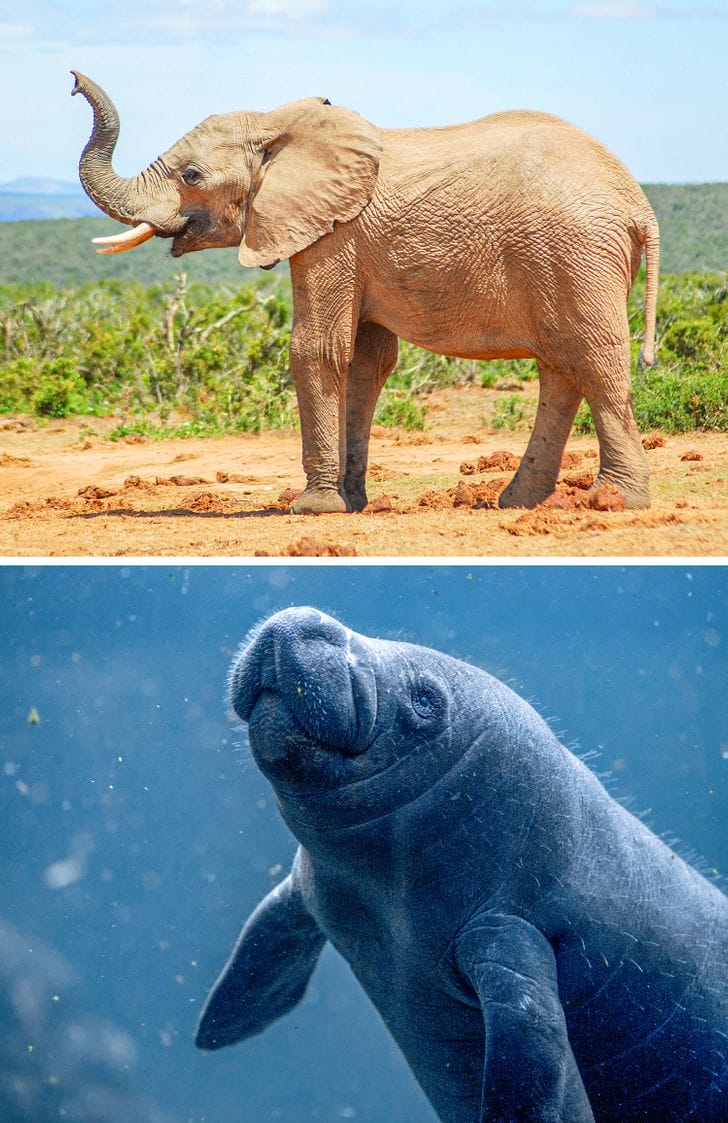
Manatees are much of the time called ocean cows and that is inappropriate. They are "obviously" more like "Sea elephants." You don't exactly see it? We should look further. It just so happens, Proboscideans (a group of creatures that incorporates elephants, mammoths, and mastodons) have a common predecessor with manatees. Regardless of our insight into the evolution of sea cows having significant gaps, it is accepted that these specific creatures plunged from a 4-legged warm blooded animal (early structures showed up around quite a while back). Еlephants and manatees bear a few visual similarities likewise (an enormous trunk plainly not being one of them). Their bodies are covered with bristle-like hairs. Manatees use them to arrange themselves in their current circumstance (by detecting vibrations).
Jellyfish and Coral

One roams the oceans and the seas uninhibitedly, while the other likes itself more like a plant (holding ground in one spot), however truly jellyfish and coral are the both animals. Furthermore, indeed, they are likewise related. They belong to a ancient group of creatures called Cnidarians. The individuals from this gathering lack organs, similar to lungs and a heart. They don't have a brain either and on second thought have a nerve net that inundates their body. Jellyfish and coral have similar tools for offense, as well — they utilize their arms to sting the near swimmers. Despite being "cousins," the connection between these 2 species isn't always sunlight and rainbows. Sometimes coral team up to launch coordinated attacks against their much more mobile family members — jellyfish. When the jelly makes the mistake of swimming too close to the coral reef, some of the coral will grab their prey with their tiny tentacles and grip tight. Others soon join the party, completely trapping the jellyfish. Now that’s teamwork.
Birds and Dinosaurs

Which came first — the chicken or the egg? It turns out the correct response is... dinosaurs! The birds you see fluttering their wings around you descended from theropods (group of 2-legged dinosaurs including the cunning velociraptors and the legendary Tyrannosaurus Rex).. However, the total change from T-rex to a feathery yellow chick most certainly didn't come for the time being. Fossils continue to emerge presenting us with “transitional” species. In 2018, Chinese paleontologists discovered the 127-million-year-old Jinguofortis perplexus. This discovery revealed an important point in the development of flight — when birds lost the dinosaur tail but hadn’t developed a fan of feathers found in the modern bird’s tails.
Whales and Cows
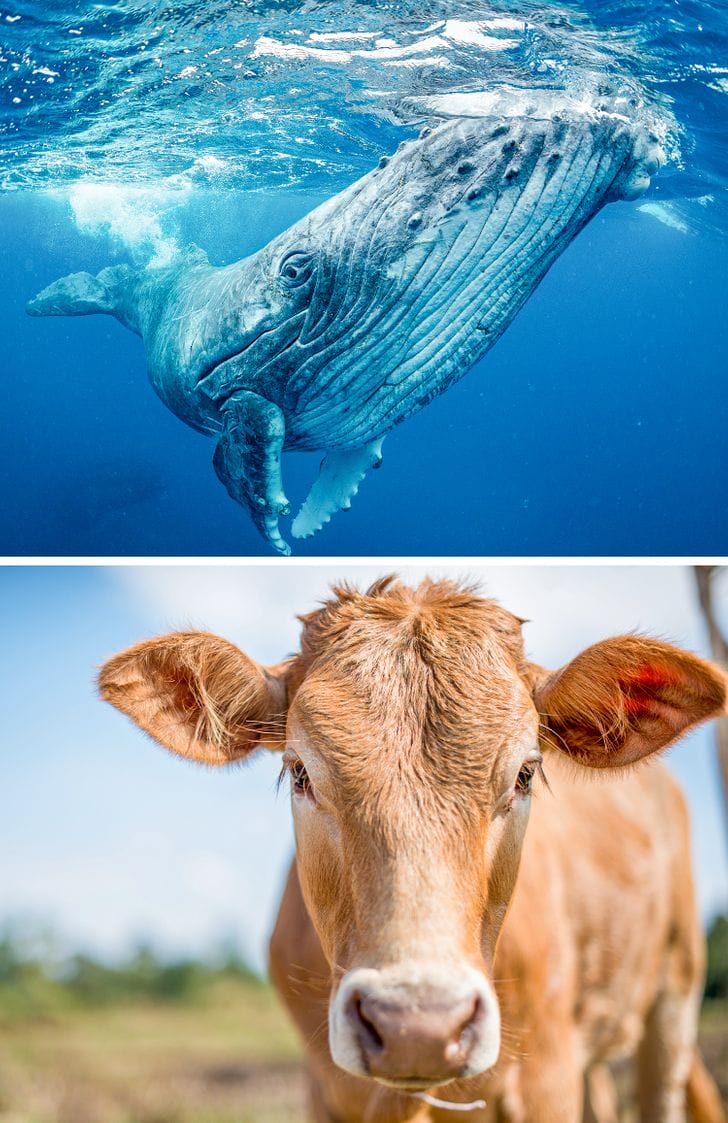
Envision how hard it is get your morning bowl of cereal assuming that the primary source of the added milk were... whales. That sounds very absurd, yet you will be amazed to figure out reality. Whales and cows share a typical ancestor — a small evolved creature with thin legs and hooves that lived in southern Asia called Indohyus (signifying "India's pig"). Despite the fact that these animals (that were the size of raccoons or domestic dogs) were generally land-dwellers, they had a specific relationship with the close by rivers. The proof recommended Indohyus involved the waters as a protected zone from predators — the development of aquatic feeding behavior emerged a lot later. The most grounded proof for cows and whales being "cousins" comes from the molecular examination of the 2. It just so happens, the nearest living family members to whales are a gathering of hoofed creatures called artiodactyls that incorporates cows, pigs, hippos, and giraffes. It seems like the family gatherings of these groups during the holidays might be quite awkward.
Horseshoe Crabs and Spiders
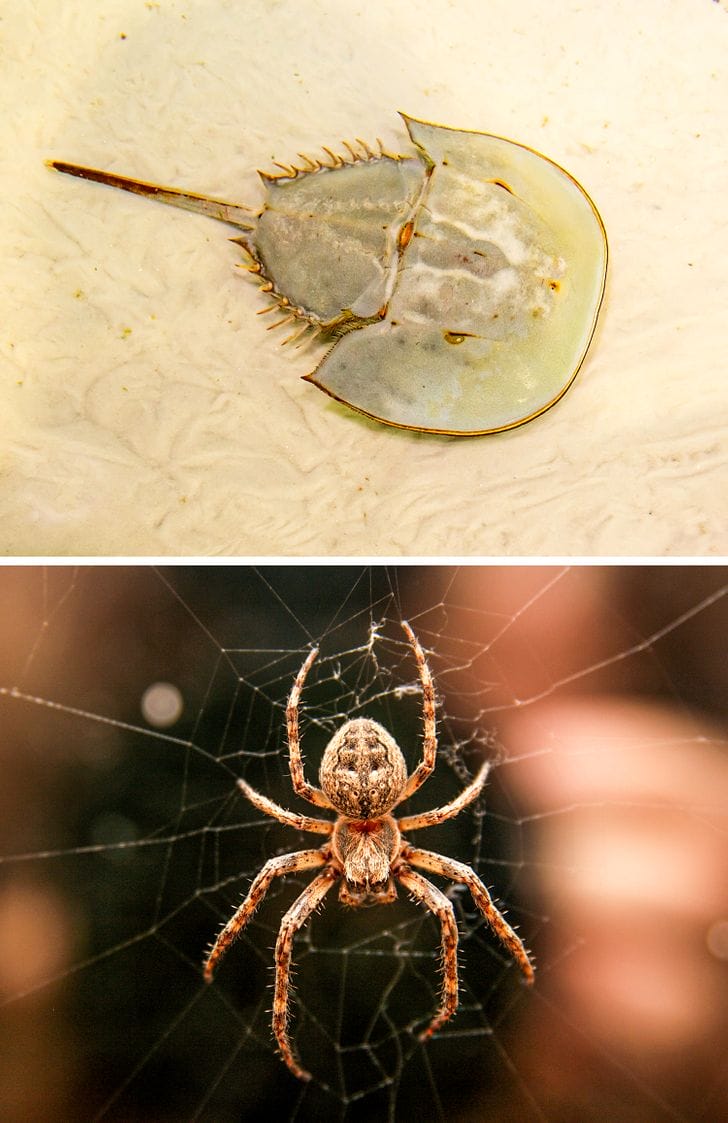
Horseshoe crabs are in a real sense legends from a far off time — they are classified "living fossils" and are in excess of 480 million years of age, making them more antiquated than dinosaurs. Yet, don't allow the name to trick you. Horseshoe crabs are in a group called Chelicerata (which incorporates spiders and scorpions). These primordial stage animals have numerous strange traits. For instance, notwithstanding having somewhat unfortunate visual perception, their eyes are multiple times more delicate to light around evening time than during the day. The most interesting perspective about them is their nobility. It contains strong immune cells which are unquestionably sensitive to harmful microbes. At the point when microscopic organisms are available, the immune cells assemble around them, ensuring the horseshoe crab is left safe.
Also read: 10 Absolutely Strange Animals That Actually Exist Which Is ExtraordinaryHorses and Rhinos
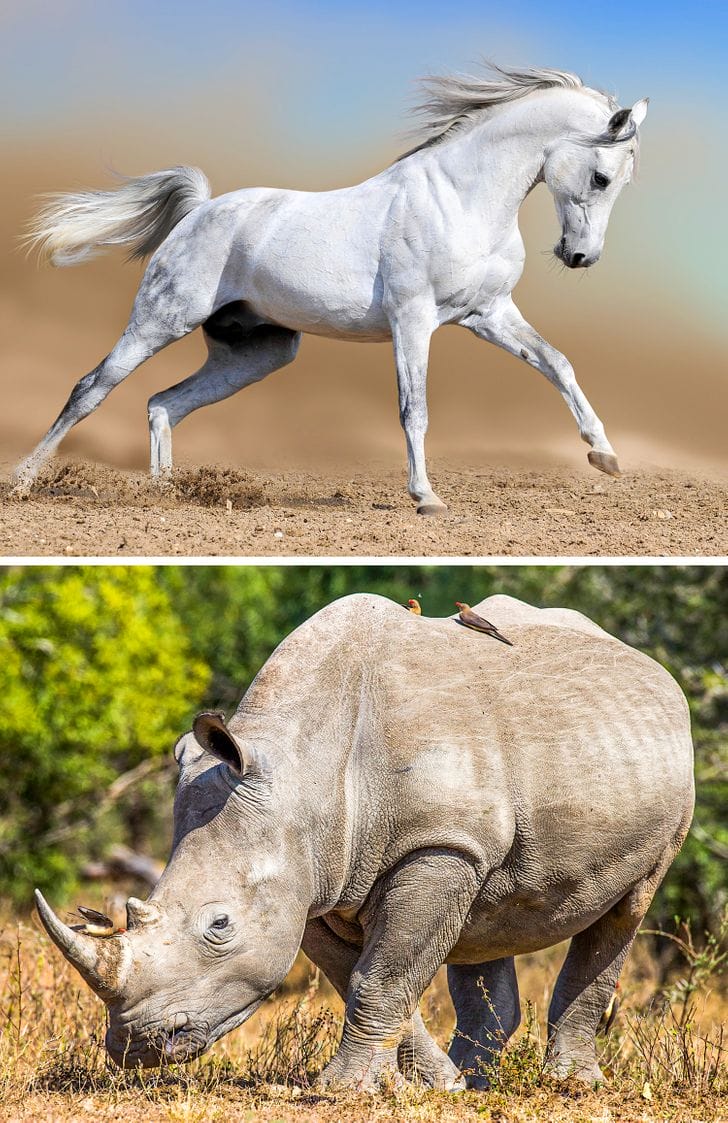
How ridiculous would it be if the prince in the fairytales was to emerge on a white... rhino. Despite how bizarre that sounds horses and rhinos are part of the same group called Odd-toed ungulate (perissodactyla) and share a command ancestor. Fossils of animals called Cambaytherium thewissi were found a couple of years ago in India. With its characteristics being close to those of a tapir it is believed that this creature is related to all living perissodactyls. A fascinating fact about the animals in this group is that they primarily use the middle toe to support their weight. In some extreme cases like with modern-day horses, the remaining toes have completely merged with the middle one — hooves allow them to cover longer distances and run at higher speeds. Which 2 animals did you have the hardest time believing were related? Do you know of more pairs that sound this odd?


10 Absolutely Strange Animals That Actually Exist Which Is Extraordinary
- 1:32 pm May 23, 2018
- suhas

10 Celebs We Had No Idea Were Closely Related To Each Other
- 3:20 pm April 23, 2022
- suhas

7 Times Animals Risked their own Life To Save Humans!
- 11:33 pm January 11, 2021
- suhas

10 Regular Things That Are Banned In North Korea And Can Take Your Life Away!
- 1:36 am September 29, 2021
- suhas

Can You Find Hidden Animals In These Images? See What It Tells About you!
- 1:32 pm September 8, 2021
- suhas

10 Incredibly Huge Animals That It Is Difficult To Believe They Exist
- 5:17 pm September 25, 2018
- suhas